The 41st Glocal Infectious Disease Research Seminar Was Held
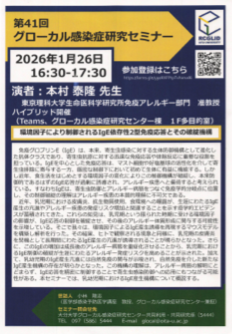
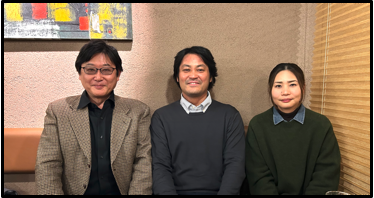
On January 26, 2026, the 41st RCGLID Research Seminar was held, featuring a lecture by Associate Professor Yasutaka Motomura from the Research Institute for Biomedical Sciences, Tokyo University of Science.
The title of the lecture was “Environmental Regulation of IgE-Dependent Type 2 Immune Responses and Mechanisms of Their Dysregulation.” Researchers from basic science fields as well as clinicians participated, leading to active and fruitful discussions.
In this lecture, Dr. Motomura explained that immunoglobulin E (IgE) originally plays a crucial role in host defense against parasitic infections, but that disruption of its regulatory mechanisms due to environmental changes can lead to the development of allergic diseases. In particular, studies using mouse models demonstrated that dermatitis and environmental factors during early infancy may induce long-term enhancement of IgE production and increase the risk of developing allergic diseases later in life. Furthermore, the involvement of innate immunity in IgE production during early life was suggested, indicating the presence of a novel regulatory mechanism.
After the seminar, participants gathered for a social event, enjoying a hot pot dinner in a relaxed atmosphere and engaging in further discussions. This occasion also provided an opportunity to strengthen relationships and foster future collaborative research. |